
The Three P's I Wrote About Long Before I Called It A Mask
Two days after I got back from a six-day industry conference in Atlanta, I sat in our regular weekly departmental meeting and watched my colleague, the only other person from our company who'd attended, stand up and present her learnings from the trip.
Slides prepared. Notes ready. She never even mentioned I’d also been there.
I'd gone into that conference wide-eyed, two years into my first full-time corporate job. My boss had pushed hard to get me a seat, it wasn't cheap, and I'd taken pages of notes so I could report back to the team. I came home energized. Two days later, in that meeting, I sat there blindsided, wondering if I'd misunderstood something. I hadn't. Afterward, my boss pulled me aside, just as thrown as I was, and asked why I hadn't been part of the presentation. My opportunity to shine was gone, and so was some of the goodwill he'd spent getting me into that room in the first place.
I remember the pit in my stomach more clearly than almost anything I actually learned that week.
That moment taught me something I didn't want to learn. Some people will play the game in ways I never would. I decided I wouldn't become that. But I also decided I couldn't keep showing up the way I had been either, quietly doing good work and assuming it would speak for itself. So I started sharing my learnings before someone else could take them. I started giving credit loudly. I started, in small ways, playing a game I'd spent years pretending I wasn't in.
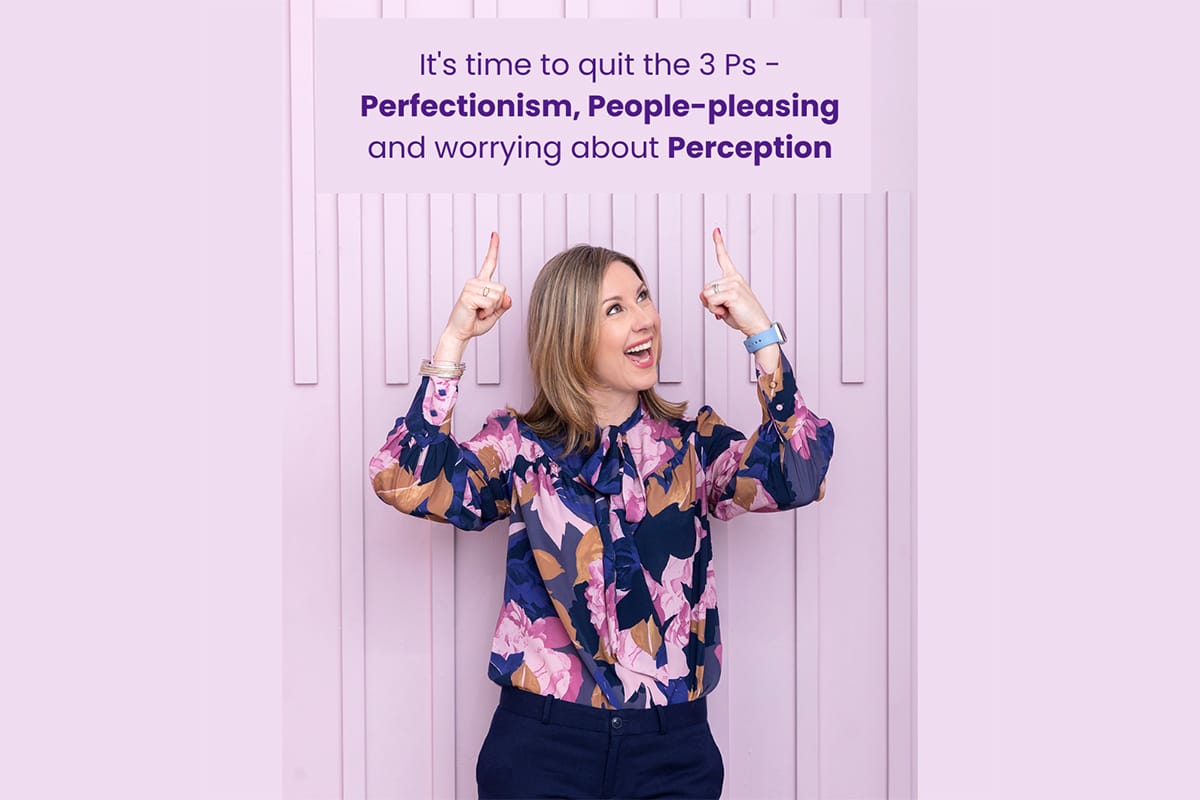
Years later, when I wrote Breaking Free, I gave that pattern a name. I called it the 3 P's: perfectionism, people-pleasing, and perception. Three habits I saw in most of the high-achieving professionals I coached, including myself. Perfectionism that made done-is-better-than-perfect feel like a personal failure. People-pleasing that made saying no feel like a risk to the relationship. And a preoccupation with perception, with how a decision or a slide or a comment would land, that quietly ran the show behind almost every choice I made.
At the time, I thought I was writing about confidence. I wasn't. I was writing an early draft of something I now spend most of my working life studying: the mask leaders put on somewhere between their first promotion and the role they're in now.
Here's what I didn't understand yet when I wrote about the 3 P's. Perfectionism and people-pleasing aren't personality quirks. They're strategies. They show up the moment someone realizes a job, a title, or a reputation can be taken away, and that being seen as anything less than exceptional, agreeable, or in control feels dangerous. So leaders build a version of themselves that's easier to manage, easier to approve of, and much harder to actually know.
I see it constantly now, sitting across from executives who built entire careers on being the one who never dropped the ball. The Perfectionist mask looks like excellence from the outside. From the inside, it's exhausting, and it usually means the leader wearing it has stopped delegating anything that might come back imperfect, which is its own kind of ceiling. The People-Pleaser mask looks like a leader everyone loves working for. It also means that leader is often the last person in the room to raise a hard truth the team needed to hear.
Perception, the third P, is the one that tends to run quietly underneath both. It's the voice asking how a decision will be read before asking whether it's the right one. I hear it in leaders who rewrite an email five times before sending it to their own team. I hear it in the ones who agree to a deadline they know is unrealistic because pushing back might make them look difficult. Most leaders I work with aren't dishonest people. They're protecting something they're not sure is safe to expose, which is a very different problem, and it needs a very different fix.
The habits I named in Breaking Free were mine to unlearn as an individual. The mask I talk about now is what happens when a whole leadership team is quietly doing the same thing, one person at a time, without anyone naming it out loud. A team full of perfectionists doesn't move faster. It moves slower, because everyone is polishing instead of shipping. A team full of people-pleasers doesn't have fewer conflicts. It has the same conflicts, just delayed and more expensive by the time they finally surface.
What changed between writing that book and doing this work now isn't the diagnosis. It's the scale. I used to help one person at a time see their own perfectionism. Now I help leadership teams see that the same habit, multiplied across ten or twenty people with decision-making power, is quietly setting the pace, the culture, and the ceiling of an entire organization.
So here's the question I'd leave you with, the same one I eventually had to sit with myself after that meeting. Not "am I a perfectionist" or "am I a people-pleaser." Those are easy to answer and easy to explain away.
The harder one is this: what decision have you made in the last month that had less to do with what was right, and more to do with how it would look?
—------
Most leaders aren't dishonest. They're wearing a mask, a version of themselves that's easier to approve of, and it's quietly costing them their best people and their performance. Shannon Talbot helps overwhelmed leaders take it off. She's a leadership speaker, facilitator, and consultant, and the author of Breaking Free. Learn more at shannontalbot.com.
The Connected Workplace
Insights, strategies & stories to foster connection, engagement, and well-being in the workplace.

Say Yes to What Matters: How to Set Boundaries and Define Your Priorities
Let’s be real. Life can get chaotic. Between...

In our culture, we associate vulnerability with emotions we want to...

Reduce Your Stress and Feel Calmer in 4 Simple Steps
Last Thursday, I found myself super grumpy and frustrated...

Want to Overcome Imposter Syndrome and Feel More Confident? Try This!
I can’t remember when I first heard the phrase imposter syndrome...

A Lesson From Leading Executive Steering Committee Meetings
Something I was told not to do in the corporate world saved my butt on stage...

How Creating a Morning Routine Changed Her Life (from Today's Parent)
Check out my article that went viral...

The Secret Two Words to Ban to Increase Your Success
Today I am letting you in on a secret...

How to Increase Your Energy: 5 Simple Tips
Let’s face it – we as a society are feeling drained...

5 Things You Should Do If You Are Experiencing Work Burnout
Authority Magazine recently interviewed me and asked me...

What Trying One Thing Every Day That Scares You Could Do For You
Have you ever wanted to try something new or different but...


The Key Ingredient You Might Be Missing in Goal Setting
Buy a Skip-It – a toy from the 80’s best described as...

In December 2018 I had no idea how my life was about to change...
FOLLOW SHANNON




(c) 2025 Shannon Talbot. All rights reserved.